Chicken producer Perdue Farms has been looking to expand its free-range chicken population to provide higher quality chicken and a better lifestyle for its flocks. This means that more and more farms will allow chickens to move freely in and out of the coop and peck outside in pastures, creating organic or free-range pastures.

Now, the company is conducting a six-month project using RFID technology to track the behavior of free-range chickens to encourage pasture farmers to raise more free-range chickens outdoors.
Perdue Farms is one of the largest table chicken producers in the United States, producing 12 million broilers per week. It is now reportedly the largest supplier of free-range chickens. The United States Department of Agriculture (USDA) defines free-range chickens as birds that have free access to the outdoors. Generally, it is thought that such chickens provide more protein and their eggs may be more nutritious.
However, most chickens are unwilling to leave the confines of the house without outside stimulation.
This year, Perdue Farms has been looking for ways to track how many chickens designated as free-range have made it onto pasture. The data is more relevant than ever to Perdue Farms and its sub-farms, where many of its farmers are competing in a contest to create the freest range chickens on pasture rather than in coops.
Bruce Stewart-Brown, Perdue Farms' senior vice president of technical services and innovation, claimed that 25% of the 12 million chickens the company produces each week are free-range. This expansion of free-range chicken farming means for farmers a lot of modifications to traditional chicken houses that do not have access to the outside environment. The question is if a square hole is cut in the chicken coop and the pasture is fenced off, what will happen to the chickens after they exit the hole.
Perdue found differences between farms, such as some locations where chickens were leaving in large numbers and other locations where not many were leaving. For Stuart Brown, the question is: "Can anyone tell me with reliable data where the most chickens go out?" Interestingly, some breeds of chickens may go out more often than others. The age of the chickens, outside weather and many other factors can also be critical. "To study these, you need data. Without good data, we can't really move forward with this project," he said.
The company flew drones over its test pastures, but found that the chickens didn't like the drones. What's more, the captured images require employees to count chickens. In response, Stuart Brown quipped, "Then I might sign up to count chickens on a farm where few chickens go out." He pointed out that with artificial intelligence, chicken counting can eventually be automated, and the next step is Use RFID.
RFID can not only track how many chickens are outside, but also their living habits. "I wanted to know the differences between the flocks and how long they stayed outside," Stuart Brown said.
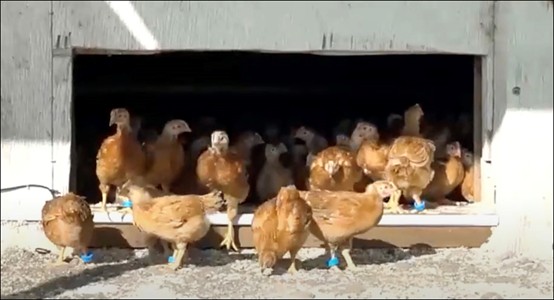
Six months ago, Perdue Farms began building a UHF RFID system at its test farm in Salisbury, Maryland, to understand the movement of its free-range chickens in and out of the coop. It segregates 1,000 of the 5,000 chickens into a dedicated RFID management space and assigns each chicken an RFID tag with a unique ID number. The square hole cut out of the chicken coop measures 2 feet high and 4 feet wide.
Perdue Farms partnered with technology group Sentinel Robotic Solutions (SRS) and GAO RFID to develop the solution, which includes drones and a robot that travels through the chicken coop to stimulate chicken activity.
Perdue Farms is currently working on a third iteration of the system based on some early experience. Stuart Brown reports, "Engineering has been more of a challenge than we imagined. It sounds easy but is harder to do because chicken behavior is unpredictable. Chickens wearing RFID tags will often come closer Square hole, then backing up, inverting and swarming through the hole.”
Perdue Farms found that because the antennas were deployed too close to the ground, radio frequency energy was being grounded. So it reconfigured the antenna, raising it to the bottom edge of the square hole, with the two antennas about 4 inches apart to identify the direction. Stuart Brown said the range was lowered to prevent confusing flock tags from being read. In addition, the location of the two antennas can also cause radio frequency interference.
The company's engineers may choose to separate the antennas further to avoid interference between them, but Stuart Brown said the design requires a balance. If the antennas are too far apart, a square hole exit may require a tunnel design, which in turn affects the chickens' willingness to enter or exit.
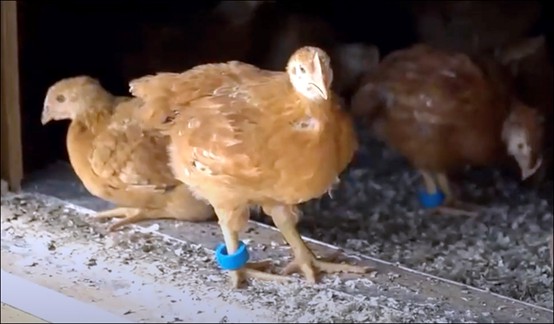
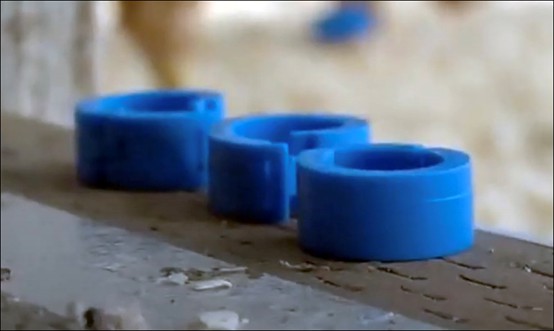
All 1,000 chickens in the study were tagged with RFID ring plastic tags that were wrapped around the chicken legs. However, 17 of the 1,000 chickens managed to escape the tags, while others kept the tags wrapped around their legs for several months of their lives.
The tags are placed on each chicken within a few weeks of birth and removed when the chickens of appropriate age leave the testing site for the chicken farm. The process is done manually and involves snapping the labels into place. Stuart Brown explains that professional chicken keepers can easily secure each tag in place, as well as remove it from the live bird. “Chickens can tell an inexperienced chicken keeper from an experienced one, but when a professional takes over they settle down”.
The system has been operating at the test site for about six months.
Perdue Farms is not only working to determine the correct configuration of reader antennas and tag sizes, but is also considering software options. The company is currently collecting data on test farms, and in the long term it hopes to be able to access the information remotely, making it easier to temporarily deploy the technology on numerous farms. For example, the company might build about 10 systems that can be moved between different sites. Currently, the farm has about 800 free-range chicken houses, each with about 20 square openings.
Now that the solution is live at the Maryland test site, Stuart Brown said it's too early to manage the data and the focus is on whether the technology can accurately capture the data. However, Perdue Farms hopes to eventually analyze each chicken and its behavior. The company speculates that some chickens may not choose to go out at all, and with this knowledge, some farmers may try to address chickens that live sedentary lives. Weather may also affect chicken activity, but without more precise data, Perdue can't make significant changes. “It would be interesting to connect the data to the weather.”
Additionally, chickens tend to respond to the presence of predators, such as birds of prey flying overhead. Perdue Farms expects data to show all chickens moving quickly during times like this.
Future research will focus on the types of pasture that attract chickens. Perdue Farms hopes to study how chickens respond to changes in pasture, such as grassing the pasture with oregano, alfalfa or dandelions. The company believes there could be an advantage in terms of meat quality and nutritional levels if the chickens are out more often and for longer periods of time. The company also wants to provide consumers with the best possible chicken.
Perdue Farms has launched a year-long competition, and 53 farmers have signed up to compete for the title of farm against free-range chickens who prefer outdoor activities by August 2022. The aim of the competition is to get more farmers involved in encouraging free-range chickens.
Stuart Brown said: "Farmers love to learn from other farmers. We hope this technology will get people interested in chicken behavior so that more farmers, and others in the poultry industry, will become passionate about chicken care. This also More beneficial to chicken eaters.”